Comodo Help
Find the desired product help
Xcitium Enterprise

Xcitium Enterprise

Xcitium Enterprise Administrator Guide

English

Print Help Download Help
Software Inventory > Continuous Threat Exposure Management (CTEM)
  • Introduction To Xcitium Enterprise - Endpoint Protection Platform
    • Key Concepts
    • Best Practices
    • Login Into The Admin Console
    • Upgrade To Full Version
  • The Admin Console
  • The Dashboards
  • CNAPP Dashboard
  • ROI Dashboard
  • Devices And Device Groups
    • Manage Device Groups
      • Create Device Groups
      • Edit A Device Group
      • Assign Configuration Profiles To A Device Group
      • Remove A Device Group
      • Run Procedures On Device Groups
    • Manage Devices
      • Add New Devices
      • Manage Windows Devices
        • View And Edit Device Name
        • View Summary Information
        • View Network Information
        • View And Manage Profiles Associated With A Device
        • View Maintenance Windows Associated With A Device
        • View And Manage Applications Installed On A Device
        • View The Files On A Device
        • View Exported Configurations And Import Profiles
        • View MSI Files Installed On A Device Through Xcitium
        • View And Manage Patches For Windows And 3rd Party Applications
        • View Antivirus Scan History
        • View And Manage Device Group Memberships
        • View Device Logs
      • Manage Mac OS Devices
        • View And Edit Mac OS Device Name
        • Summary Information Of Mac Device
        • View Installed Applications
        • View Quarantined Files On Mac OS Device
        • View And Manage Profiles Associated With A Device
        • View Packages Installed On A Device Through Xcitium
        • View And Manage Device Group Memberships
        • View Mac Device Logs
      • Manage Linux Devices
        • View And Edit Linux Device Name
        • Summary Information Of Linux Device
        • View Network Information Of A Linux Device
        • View And Manage Profiles Associated With A Linux Device
        • View Linux Packages Installed On A Device Through Dragon
        • View And Manage Device Group Memberships
      • Manage Android Devices
        • View And Edit Device Name
        • View Summary Information
        • Manage Installed Applications
        • View And Manage Profiles Associated With A Device
        • View Sneak Peek Pictures To Locate Lost Devices
        • View The Location Of The Device
        • View And Manage Device Group Memberships
      • Manage IOS Devices
        • View And Edit Device Name Of An IOS Device
        • View Summary Information Of An IOS Device
        • View Applications Installed On An IOS Device
        • View And Manage Profiles Associated With An IOS Device
        • View The Location Of An IOS Device
        • View And Manage Group Memberships Of An IOS Device
      • View User Information
      • Remote Management Of Windows And Mac OS Devices
        • Transfer Items To / From The Remote Computer
      • Remotely Manage Folders And Files On Windows Devices
      • Manage Processes On Remote Windows Devices
      • Manage Services On Remote Windows Devices
      • Use The Command Prompt On Remote Windows Devices
      • View Event Logs On Remote Windows Devices
      • Apply Procedures To Windows And Mac Devices
      • Remotely Install And Manage Packages On Windows Devices
      • Remotely Install Packages On Mac OS Devices
      • Remotely Install Packages On Linux Devices
      • Send Enrollment Link To IOS Devices
      • Generate An Alarm On Android Devices
      • Remotely Lock Mobile And Mac OS Devices
      • Wipe Selected Mobile And Mac Devices
      • Assign Configuration Profiles To Selected Devices
      • Set / Reset Screen Lock Password For Mobile Devices
      • Update Device Information
      • Send Text Messages To Mobile Devices
      • Restart Selected Windows Devices
      • Change A Device's Owner
      • Change The Ownership Status Of A Device
      • Add Custom Notes And Tags On Devices
      • Remove A Device
      • Generate Device List Report
      • Manage Isolate And Release From Isolation
    • Bulk Enrollment Of Devices
      • Enroll Windows, Mac OS And Linux Devices By Installing The Communication Client
        • Enroll Windows Devices Via AD Group Policy
        • Enroll Windows, Mac OS And Linux Devices By Offline Installation Of Agent
        • Enroll Windows Devices Using Auto Discovery And Deployment Tool
      • Enroll Android And IOS Devices Of AD Users
    • Download And Install The Remote Control Tool
  • Cloud Workloads
  • Cloud Assets
  • Cloud Security
    • View Vulnerabilities Findings
    • Registry Scan
    • CSPM Executive Dashboard
    • Compliance Summary
    • CWPP Dashboard
    • App Behavior
    • Manage Policies
    • Remediation
    • View Alerts
    • Manage Triggers
    • View Reports
  • Users And User Groups
    • Manage Users
      • Create New User Accounts
        • Manually Add Users
        • Import Users From A CSV File
      • Enroll User Devices For Management
        • Enroll Android Devices
        • Enroll IOS Devices
        • Enroll Windows Endpoints
        • Enroll Mac OS Endpoints
        • Enroll Linux OS Endpoints
      • View User Details
        • Update The Details Of A User
      • Assign Configuration Profiles To User Devices
      • Remove A User
      • Generate New Password For A User
      • Reset Two Factor Authentication Token For A User
      • Run Procedures On User Devices
    • Manage User Groups
      • Create A New User Group
      • Edit A User Group
      • Assign Configuration Profiles To A User Group
      • Remove A User Group
      • Run Procedures On User Group Devices
    • Configure Role Based Access Control For Users
      • Create A New Role
      • Manage Permissions And Users Assigned To A Role
      • Remove A Role
      • Manage Roles Assigned To A User
  • Configuration Templates
    • Create Configuration Profiles
      • Profiles For Android Devices
      • Profiles For IOS Devices
      • Profiles For Windows Devices
        • Create Windows Profiles
          • Associated Devices Settings
          • Antivirus Settings
          • Communication Client And Xcitium Client - Security Application Update Settings
          • File Rating Settings
          • Firewall Settings
          • HIPS Settings
          • Containment Settings
          • Maintenance Window Settings
          • VirusScope Settings
          • Xcitium Verdict Cloud
          • Global Proxy Settings
          • Client Proxy Settings
          • Agent Discovery Settings
          • Communication Client And Xcitium Client - Security Application UI Settings
          • Logging Settings
          • Client Access Control
          • External Devices Control Settings
          • Monitors
          • Procedure Settings
          • Remote Control Settings
          • Remote Tools Settings
          • Miscellaneous Settings
          • Script Analysis Settings
          • Data Loss Prevention Settings
          • Patch Management Settings
          • Performance Settings
          • Thumbnails Settings
          • Chat Settings
          • Applications Settings
        • Import Windows Profiles
      • Profiles For Mac OS Devices
        • Create A Mac OS Profile
          • Antivirus Settings For Mac OS Profile
          • Certificate Settings For Mac OS Profile
          • Restrictions Settings For Mac OS Profile
          • VPN Settings For Mac OS Profile
          • Wi-Fi Settings For Mac OS Profile
          • Remote Control Settings For Mac OS Profile
          • External Device Control Settings For Mac OS Profile
          • Valkyrie Settings For MacOS Profile
          • Procedure Settings For Mac Profiles
          • Monitor Settings For Mac OS Profile
      • Profiles For Linux Devices
        • Create A Linux Profile
          • Antivirus Settings For Linux Profile
          • Communication Client And XcitiumClient - Security Application Update Settings For Linux Profile
          • User Interface Settings For Linux Profile
          • Logging Settings For Linux Profile
          • Clients Access Control Settings For Linux Profile
          • Valkyrie Settings For Linux Profile
    • View And Manage Profiles
      • Export And Import Configuration Profiles
      • Clone A Profile
    • Edit Configuration Profiles
    • Manage Default Profiles
    • Manage Alerts
      • Create A New Alert
      • Edit / Delete An Alert
    • Manage Procedures
      • View And Manage Procedures
      • Create A Custom Procedure
      • Combine Procedures To Build Broader Procedures
      • Review / Approve / Decline New Procedures
      • Add A Procedure To A Profile / Procedure Schedules
      • Import / Export / Clone Procedures
      • Change Alert Settings
      • Apply Procedures To Devices
      • Edit / Delete Procedures
      • View Procedure Results
    • Manage Monitors
      • Create Monitors And Add Them To Profiles
        • Monitors For Windows Devices
        • Monitors For Mac OS Devices
      • View And Edit Monitors
    • Data Loss Prevention Rules
      • Create DLP Discovery Rules And Add Them To Profiles
      • View And Edit DLP Discovery Rules
      • Create DLP Monitoring Rules And Add Them To Profiles
      • View And Edit DLP Monitoring Rules
  • Security Systems
    • View Alerts And Security Events
      • View Alerts And Security Events By Time
      • View Alerts And Security Events By Files
      • View Alerts And Security Events By Device
      • Alert Policy
      • Suppression Rule
    • Investigate Events
      • Search Events By Query
      • Search Events By File
      • Search Events By Device
      • View Android Threat History
      • Process Timeline
    • Endpoint Security Status
      • Run Antivirus And/or File Rating Scans On Devices
      • Handle Malware On Scanned Devices
      • Update Virus Signature Database On Windows, Mac OS And Linux Devices
    • View And Manage Blocked Threats
    • View And Manage Quarantined Items
    • View Contained Threats
    • View And Manage Autorun Items
    • Manage File Trust Ratings On Windows Devices
      • File Ratings Explained
    • View List Of File Verdicts
    • View History Of External Device Connection Attempts
    • Data Loss Prevention Scans
      • DLP Logs
      • DLP Quarantined Files
  • Network Management
    • Create And Run Network Discovery Tasks
    • Manage Profiles For Network SNMP Devices
    • Manage Network Devices
      • Manage SNMP Devices
        • SNMP Device Details Interface
      • Discovered Devices
    • Manage Network Monitors
  • Software Inventory
    • View Applications Installed On Android And IOS Devices
      • Blacklist And Whitelist Applications
    • Basic Patch Management
      • Manage OS Patches On Windows Endpoints
      • Install 3rd Party Application Patches On Windows Endpoints
        • Xcitium Supported 3rd Party Applications
    • Continuous Threat Exposure Management (CTEM)
    • View And Manage Applications Installed On Windows Devices
      • Uninstall A Windows Application From Selected Devices
      • Uninstall A Windows Application From All Devices
    • Vulnerability Management
  • Management Settings
    • Account Management
    • License Management
      • Manage Your Licenses
      • License Allocations
      • Bill Forecast
  • Configure Xcitium Enterprise
    • Email Notifications, Templates And Custom Variables
      • Configure Email Templates
      • Configure Email Notifications
      • Create And Manage Custom Variables
      • Create And Manage Registry Groups
      • Create And Manage COM Groups
      • Create And Manage File Groups
      • Create And Manage Tags
    • Xcitium Enterprise Portal Configuration
      • Import User Groups From LDAP
      • Configure Portal Settings
      • Configure Communication And Security Client Settings
        • Configure The Xcitium Android Client
          • Configure Android Client General Settings
          • Configure Android Client Antivirus Settings
          • Add Google Cloud Messaging (GCM) Token
        • Add Apple Push Notification Certificate
        • Configure Windows Clients
          • Configure Communication Client Settings
          • Configure Client Security Settings
      • Manage Xcitium Enterprise Extensions
      • Configure Xcitium Enterprise Reports
      • Device Removal Settings
      • Account Security Settings
      • Set-up Administrator's Time Zone And Language
      • Configure Audit Log Settings
    • Dashboard Settings
    • Cloud Security Settings
      • Manage Cloud Accounts
        • Amazon Web Server (AWS) Account Onboarding
        • Google Cloud Platform (GCP) Account Onboarding
        • Microsoft Azure Account Onboarding
      • Manage Cluster
      • Configure Integrations
        • CWPP
        • CSPM
        • Registry
        • S3 Data Source
      • Create And Manage Labels
      • Create And Manage Tags
      • Create And Manage Groups
      • Configure Ticket Template
    • Data Protection Templates
      • View And Manage Pattern Variables
      • View And Manage Keyword Groups
    • View Version And Support Information
    • Alert Notification Settings
  • Appendix 1a - Xcitium Services - IP Nos, Host Names And Port Details - EU Customers
  • Appendix 1b - Xcitium Services - IP Nos, Host Names And Port Details - US Customers
  • Appendix 2 - Pre-configured Profiles
  • Appendix 3 - Default Xcitium Security Policy Details
  • About Xcitium

Continuous Threat Exposure Management (CTEM)


Continuous Threat Exposure Management (CTEM) is a proactive cybersecurity approach that continuously identifies, assesses, and prioritizes security exposures across an organization’s environment. It works alongside patch management to ensure vulnerabilities are addressed promptly by applying updates, reducing risk, and strengthening overall system security.

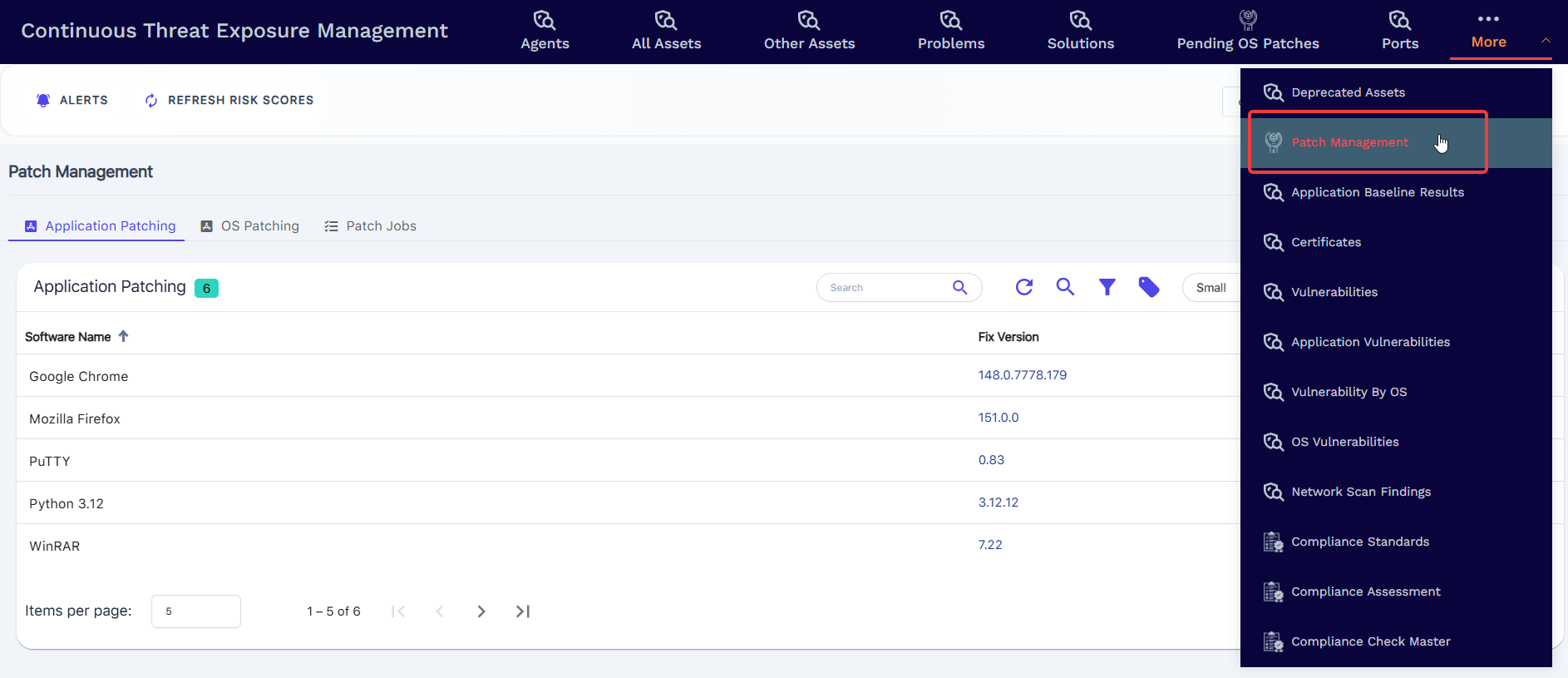
  • Click 'ITSM' > 'Patch Management' > 'CTEM'

The interface has been divided into three sections
  • Application Patching
  • OS Patching
  • Patch Jobs

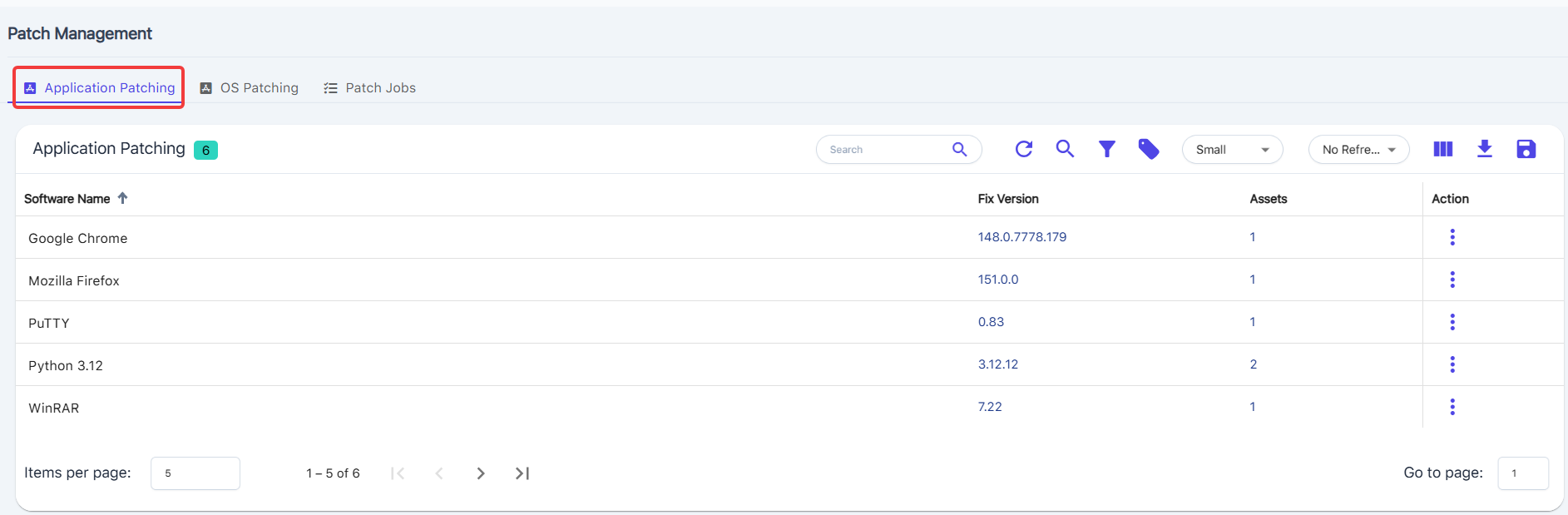
Application Patching


The Application Patching section allows you to manage third-party software updates across your managed devices. From here, you can:
  • View available application patches
  • Track patch versions (Fix Versions)
  • See affected devices (Assets)
  • Deploy or manage patch actions


Application Patching - Column Descriptions  
Column Heading   Description 
Software Name  Name of the application 
Fix Version  Latest available patched version 
Assets  Number of devices affected 
Action  Available Patch actions - Patch Now, Patch Later has explained here.
  Controls
Search Bar  Quickly find a specific application by name 
Reload Table Data  Reloads the patch list 
Global Search  Global Search provides a centralized way to locate assets, alerts, and vulnerabilities, improving visibility and response efficiency. 
Filter Table Data  We can filter the table data using Software name or Fix Version
Filter by Tags  Tap the search bar to filter by tags, choose from Include or Exclude options, select the desired tag(s), and click Submit to view the results. 
Change Font Size  Adjust the font size by selecting from Small, Medium, or Large options. 
Refresh Interval  Set the refresh interval by choosing No Refresh, 1 minute, 5 minutes, or 30 minutes.
View Columns, Reorder Columns  Customize the table by viewing and reordering columns such as Software Name, Fix Version, and Assets. 
Download as CSV  Download the data as a CSV file for easy access and analysis. 
Save Settings  Save table settings to preserve your selected columns, order, and preferences for future use. 


Available Patch Actions
  • Patch Now
  • Patch Later

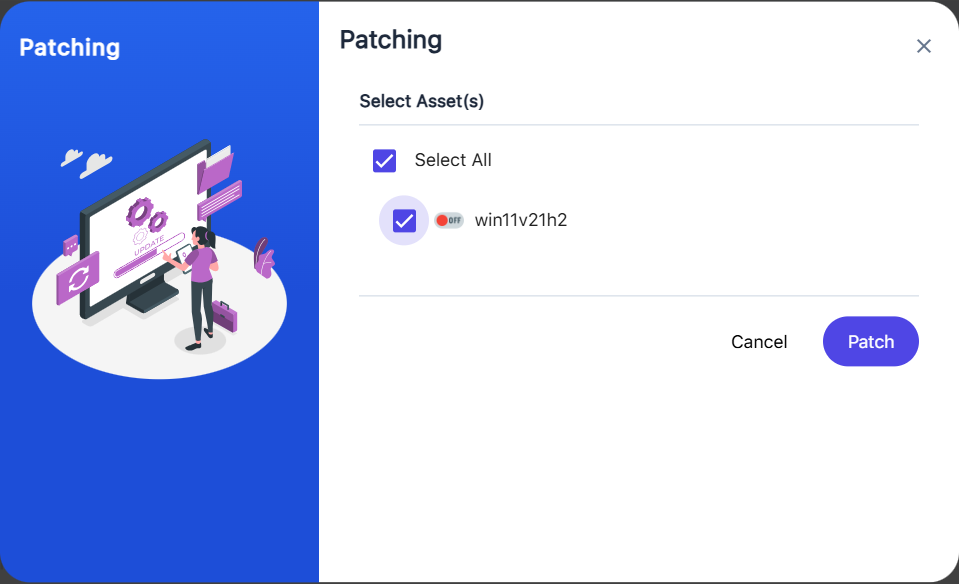
Patch Now

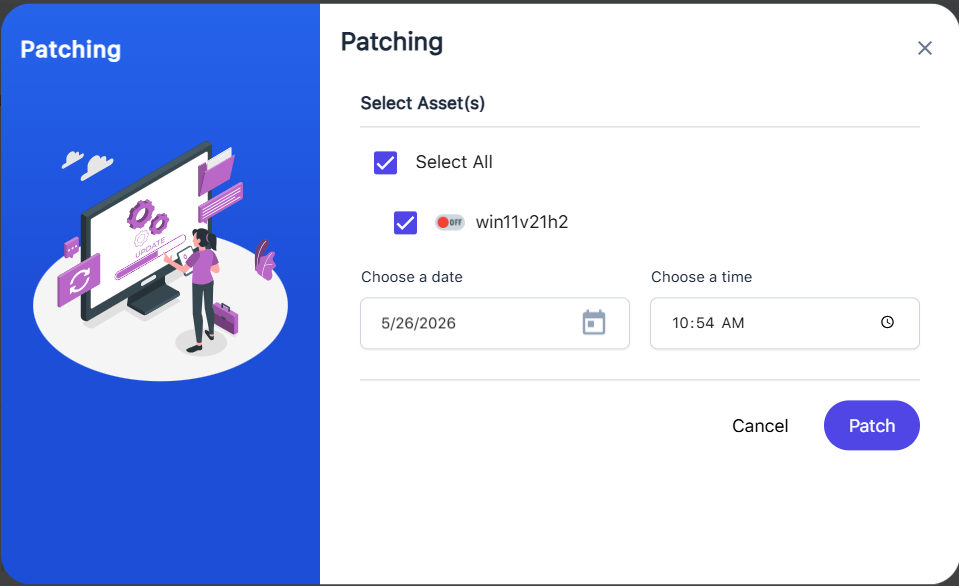
Installs the selected patch immediately on the chosen devices.

Select the applicable asset(s), then choose the Patch button; otherwise, click Cancel not to patch.


Patch Later

Patch Later options let you schedule the selected patch to be installed at a specified time and date.


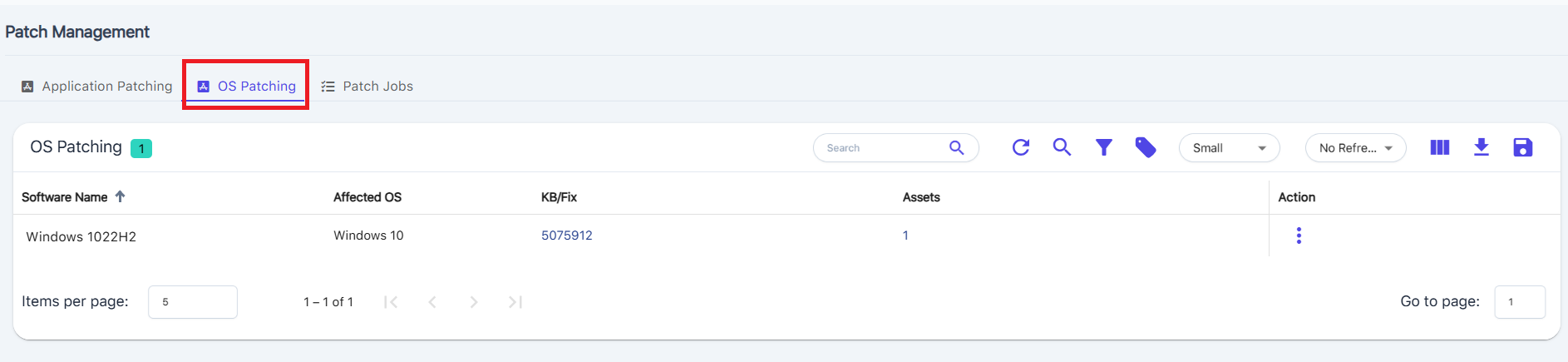
OS Patching


Manages operating system updates by identifying, scheduling, and deploying patches to keep systems secure and up to date. From here, you can:
  • View available OS updates
  • Track update details (KB/Fix)
  • See affected devices (Assets)
  • Deploy or schedule patch actions


OS Patching - Column Descriptions  
Column Heading   Description 
Software Name  Displays the OS version requiring updates (e.g., Windows 10, Windows 11) 
Affected OS Indicates the operating system impacted
KB/Fix  Shows the specific update or knowledge base (KB) number
Assets  Number of devices requiring the update 
Action  Provides the option to deploy patches
  Controls
Search Bar  Quickly find specific OS updates
Reload Table Data  Reload the latest patch data
Global Search  Global Search provides a centralized way to locate assets, alerts, and vulnerabilities, improving visibility and response efficiency. 
Filter Table Data  We can filter the table data using Affected OS, KB/Fix or Software Name
Filter by Tags  Tap the search bar to filter by tags, choose from Include or Exclude options, select the desired tag(s), and click Submit to view the results. 
Change Font Size  Adjust the font size by selecting from Small, Medium, or Large options. 
Refresh Interval  Set the refresh interval by choosing No Refresh, 1 minute, 5 minutes, or 30 minutes.
View Columns, Reorder Columns  Customize the table by viewing and reordering columns such as Software Name, Affected OS, KB/fix, and Assets. 
Download as CSV  Download the data as a CSV file for easy access and analysis. 
Save Settings  Save table settings to preserve your selected columns, order, and preferences for future use. 

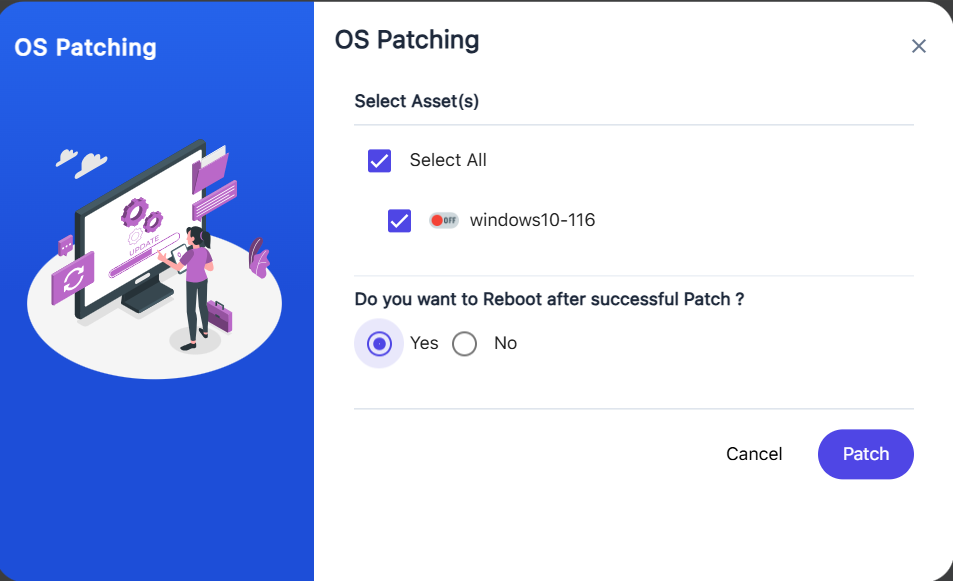
Clicking 'Patch' in OS Patching opens the prompt to select the patch installation's machine(s) and reboot settings.


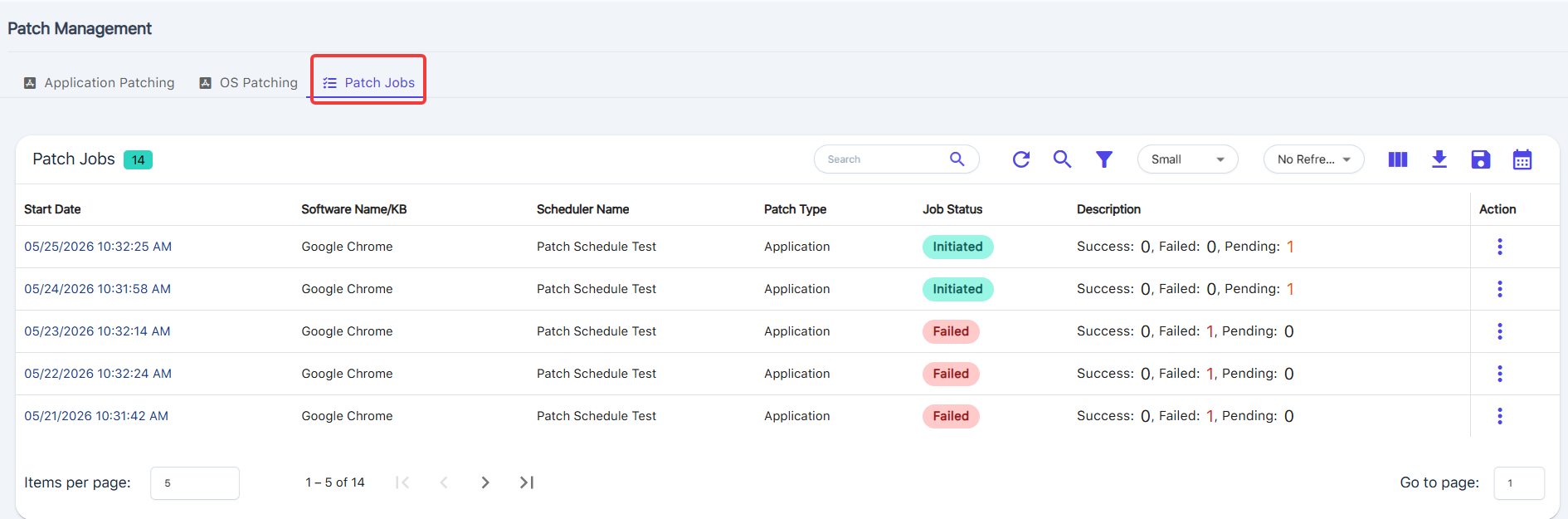
Patch Jobs


The Patch Jobs section allows you to monitor and manage patch deployment tasks across your devices. From here, you can:
  • View scheduled and executed patch jobs
  • Track patch deployment status (Success, Failed, Pending)
  • See details of applied patches (Software/KB)
  • Monitor results across affected devices


Patch Jobs - Column Descriptions    
Column Heading  Description 
Start Date  Displays the date and time when the patch job was initiated 
Software Name/KB  Shows the application name or OS update (KB) included in the job 
Scheduler Name  Indicates the name of the scheduled task or job 
Patch Type  Specifies whether the patch is for an application or operating system 
Job Status  Shows the current status of the job (e.g., Success, Failed, Pending) 
Description  Provides a summary of the job results, including counts of successful, failed, and pending updates 
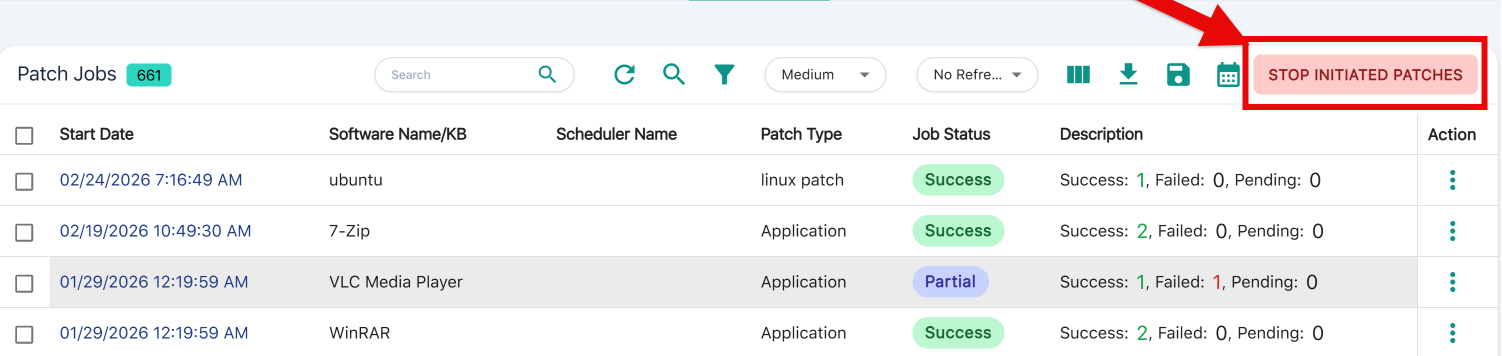
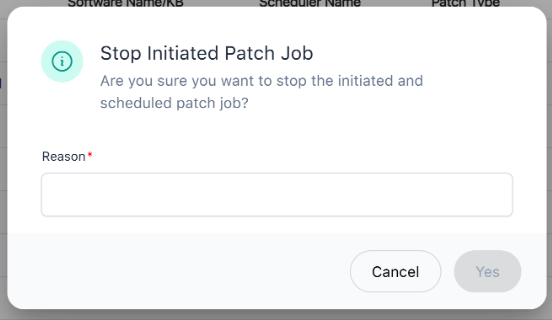
Action  Provides the option to terminate the patch job. 


Our Products
  • Free Antivirus
  • Free Internet Security
  • Website Malware Removal
  • Free Anti-Malware
  • Anti-Spam (Free Trial)
  • Windows Antivirus
  • Antivirus for Windows 7
  • Antivirus for Windows 8
  • Antivirus for Windows 10
  • Antivirus for MAC
  • Antivirus for Linux
  • Free Endpoint Security
  • Free ModSecurity
  • Free RMM
  • Free Website Malware Scanner
  • Free Device Manager for Android
  • Free Demo
  • Network Security
  • Endpoint Protection
  • Antivirus for Android
  • Comodo Antivirus
  • Wordpress Security
Cheap CDN
  • Bootstrap CDN
  • Semantic UI CDN
  • Jquery CDN
  • CDN Plans
  • CDN
  • Free CDN
Enterprise
  • Patch Management Software
  • Patch Manager
  • Service Desk
  • Website Down
  • Endpoint Protection Solutions
  • Website Security Check
  • Remote Monitoring and Management
  • Website Security
  • Device Manager
  • ITSM
  • CRM
  • MSP
  • Android Device Manager
  • MDR Services
  • Managed IT Support Services
  • Free EDR
Free SSL Certificate
Support Partners Terms and Conditions Privacy Policy

© Comodo Group, Inc. 2026. All rights reserved.